Product Overview
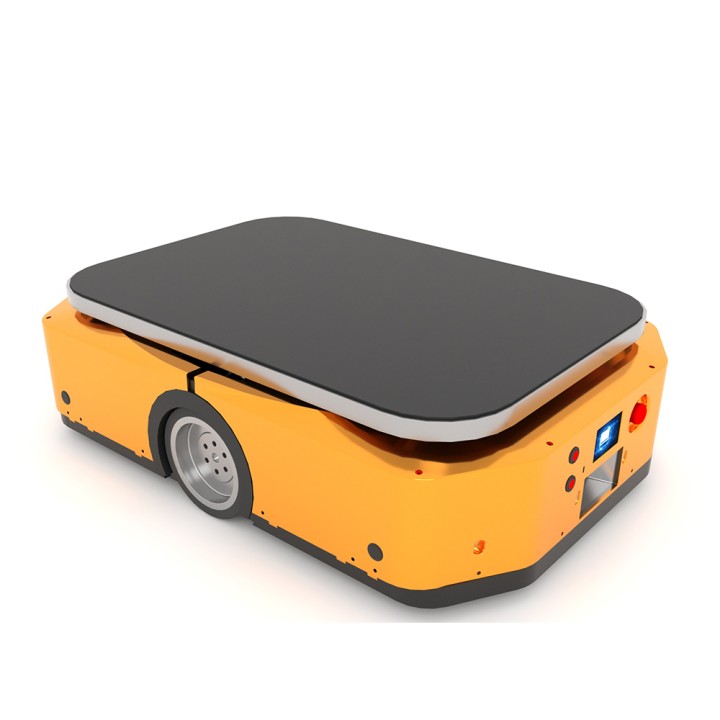
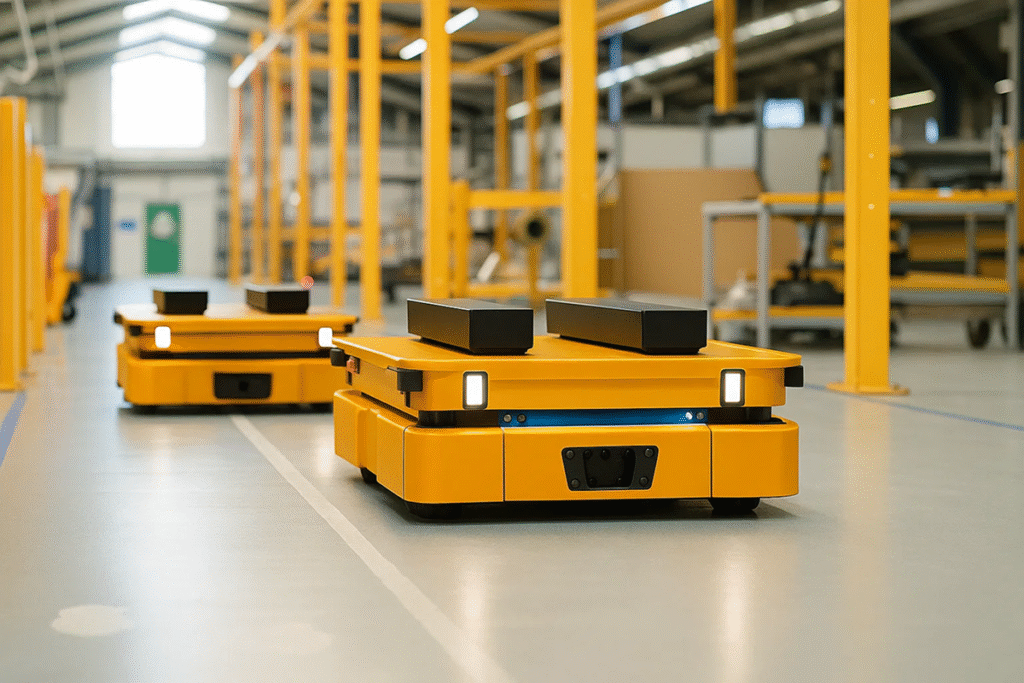
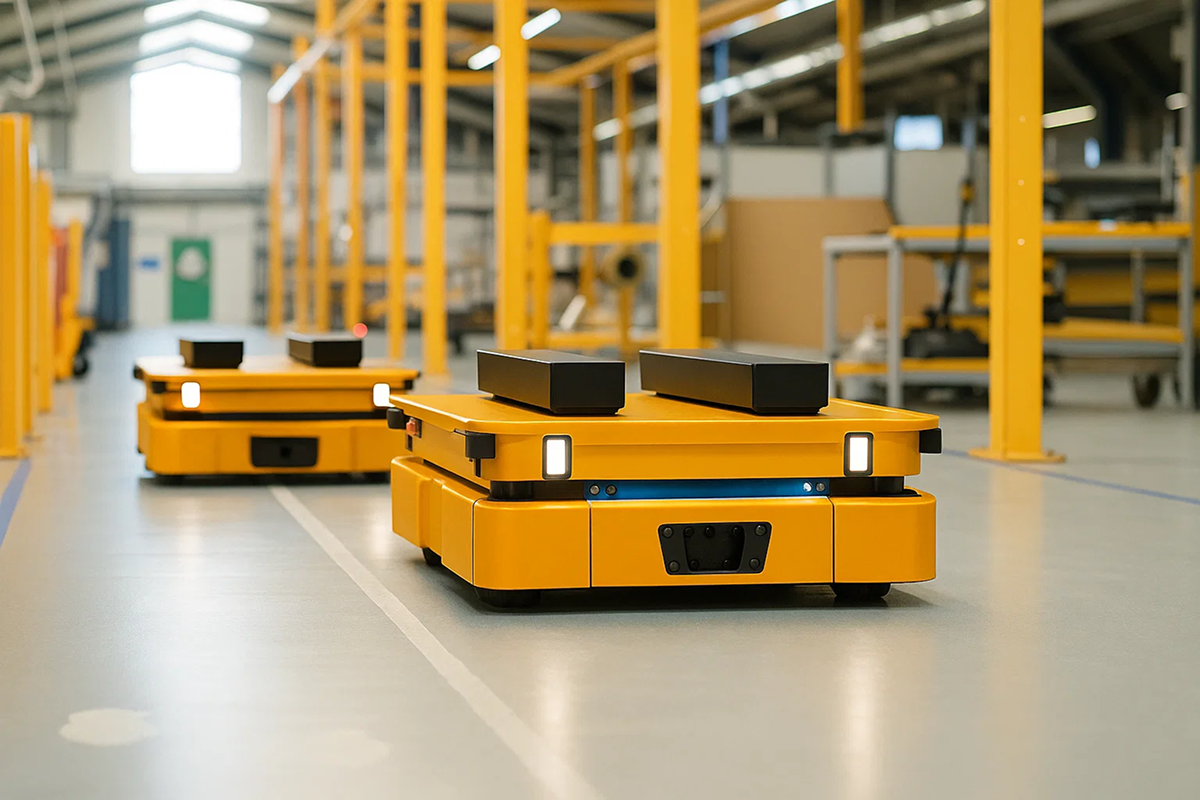
Automated Guided Vehicles (AGVs) and Autonomous Mobile Robots (AMRs) are robotic platforms used for transporting materials within facilities. AGVs typically follow fixed routes defined by magnetic tape, QR markers, or wires, while AMRs navigate freely using sensors, LiDAR, and SLAM algorithms.
Introduction & Core Benefits
Leador Tech’s AGV (Automated Guided Vehicles) & AMR (Autonomous Mobile Robots) represent the pinnacle of automated internal material transport. While both autonomously move materials, they differ fundamentally in navigation: Our solutions are designed to automate repetitive transport tasks, reduce reliance on manual forklifts, and integrate seamlessly into your existing operations, delivering goods precisely where and when they are needed. From raw material delivery to production lines, WIP movement, and finished goods transfer, AGVs and AMRs are transforming efficiency and safety across manufacturing, e-commerce, automotive, and healthcare sectors.AGV & AMR Robot Types
01. Tugger AGVs/AMRs
02. Forklift AGVs/AMRs
03. Unit-Load AGVs/AMRs
04. Under-Cart AGVs/AMRs
Application Scenarios
E-commerce
AMRs deliver totes or bins to picking stations
Warehousing
Enclosed AGVs for clean room material handling
Assembly Lines
AGVs move heavy parts between stations
Manufacturing
Small-load AMRs for component transfer
Food & Beverage
Cold chain-compatible AGVs with frames.
- Fleet Management Software: Centralized software that optimizes robot dispatching, traffic management, task assignment, and integrates with WMS/MES.
- Navigation & Safety Sensors: LiDAR scanners for mapping and obstacle detection, safety bumpers, 3D cameras for perception, encoders for odometry.
- Charging Stations: Automated, often opportunistic, charging points for continuous operation.
- Payload Modules: Customizable top modules like conveyors, lift tables, robotic arms, or towing hitches to suit specific material handling needs.
- Mapping & Programming Software: Intuitive tools for creating facility maps, defining routes (for AGVs), and configuring tasks.
- Communication Infrastructure: Robust Wi-Fi or other industrial wireless networks for seamless robot-to-system communication.
Technical Specifications
|
Parameter
|
Value Range
|
Engineering Notes
|
|---|---|---|
|
Max Payload |
100 – 2,500 kg |
Define based on application needs |
|
Navigation Type |
SLAM, QR code, magnetic, |
AMR = SLAM/LiDAR, AGV = tape/QR/wire |
|
Travel Speed |
0.5 – 2.0 m/s |
Affects cycle time and battery life |
|
Positioning Accuracy |
±10 mm (AGV) / ±5 mm (AMR) |
AMRs use real-time correction |
|
Runtime Per Charge |
6 – 12 hours |
Depends on payload and travel pattern |
|
Charging Time |
1 – 2 hours (fast charge |
Docking or manual options available |
|
Operating Temperature |
-10°C to +45°C |
Optional heating systems for cold areas |
Applications & Case Studies
Discover how Leador has empowered businesses to achieve their logistics goals. Explore our detailed case studies showcasing real-world implementations and measurable results
Compatibility, Safety & Support
Our related products
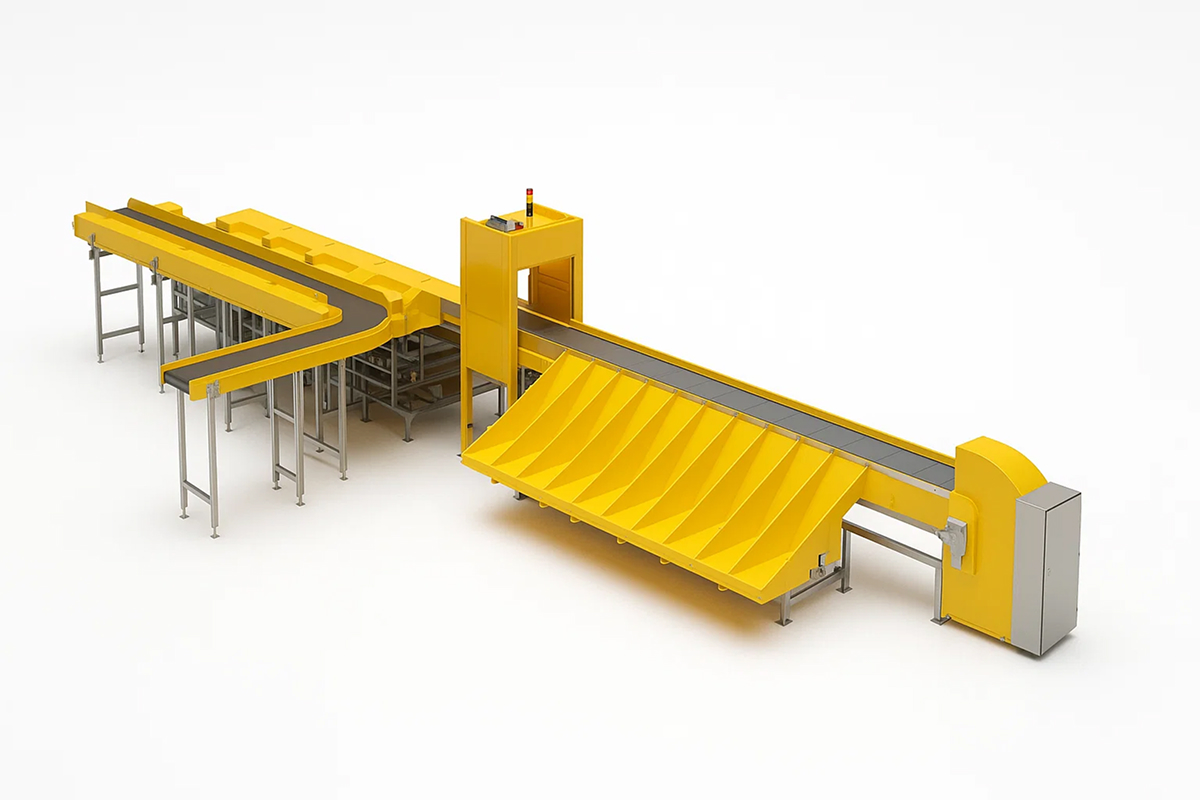
Linear Cross-Belt Sorter
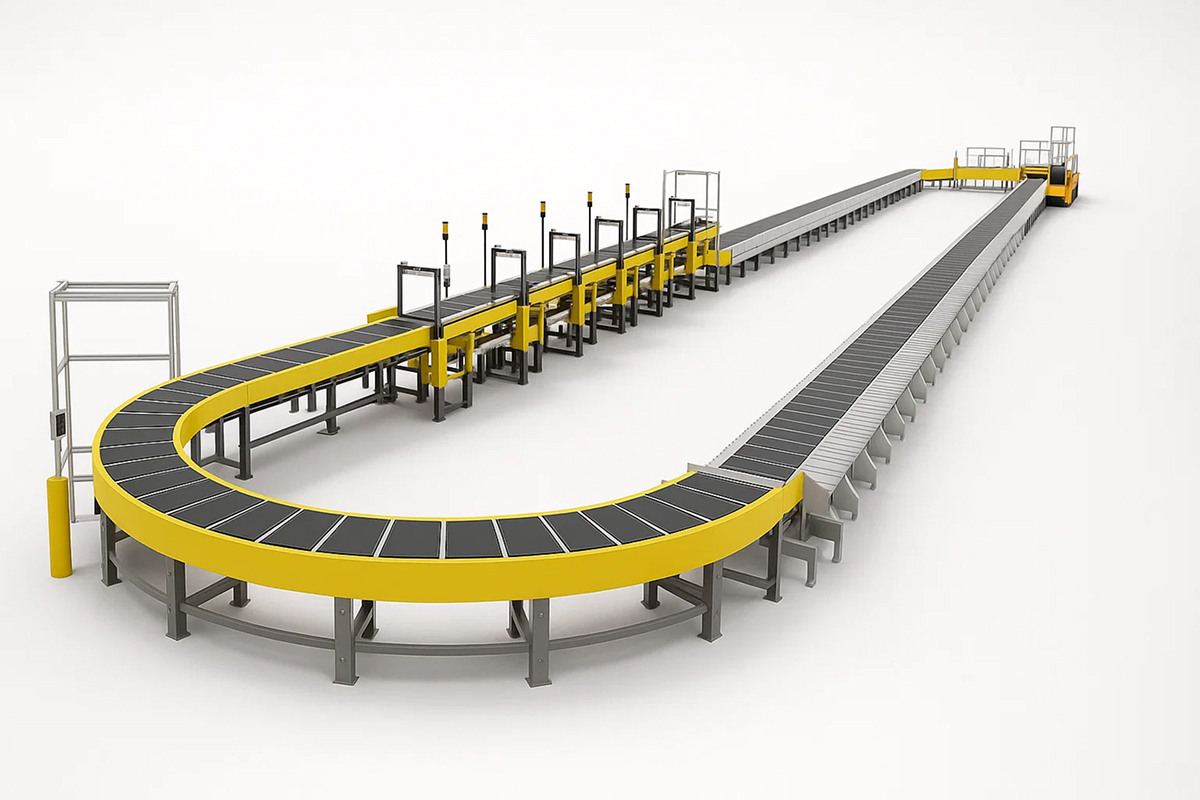
Loop (Circular) Cross-Belt Sorter
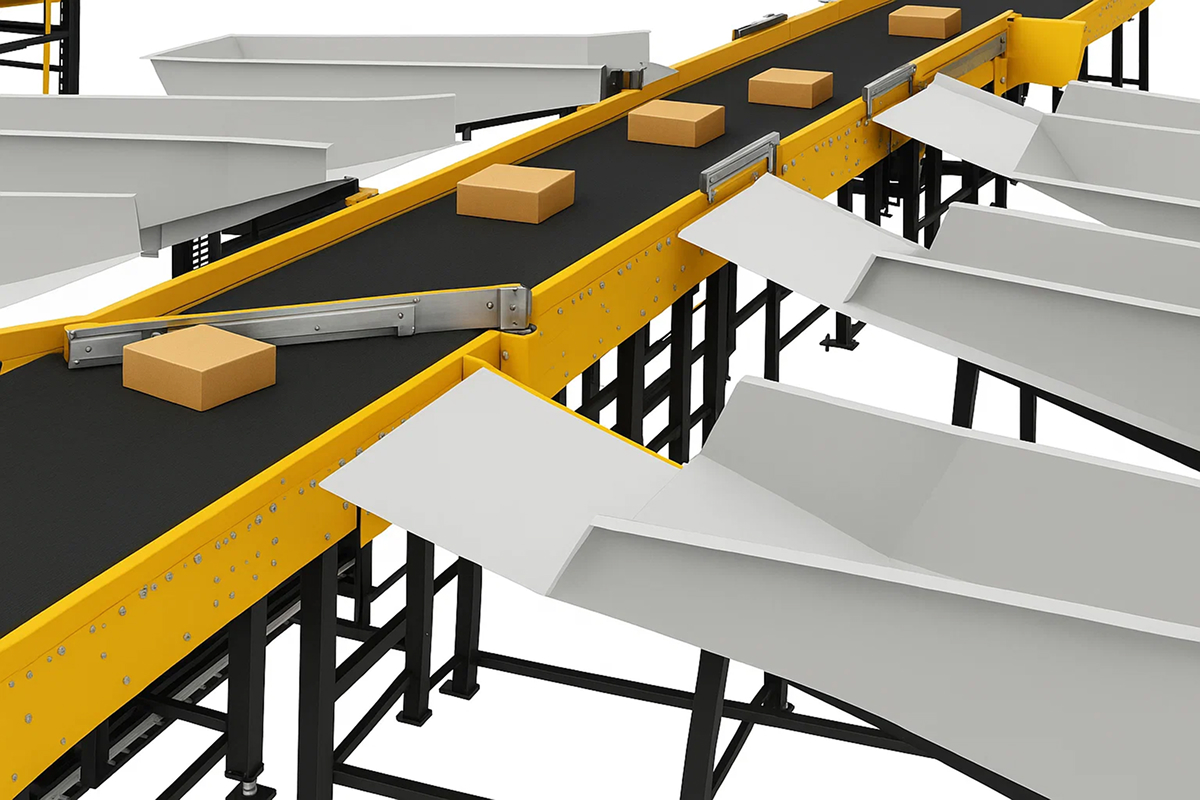
Swing Arm Sorter
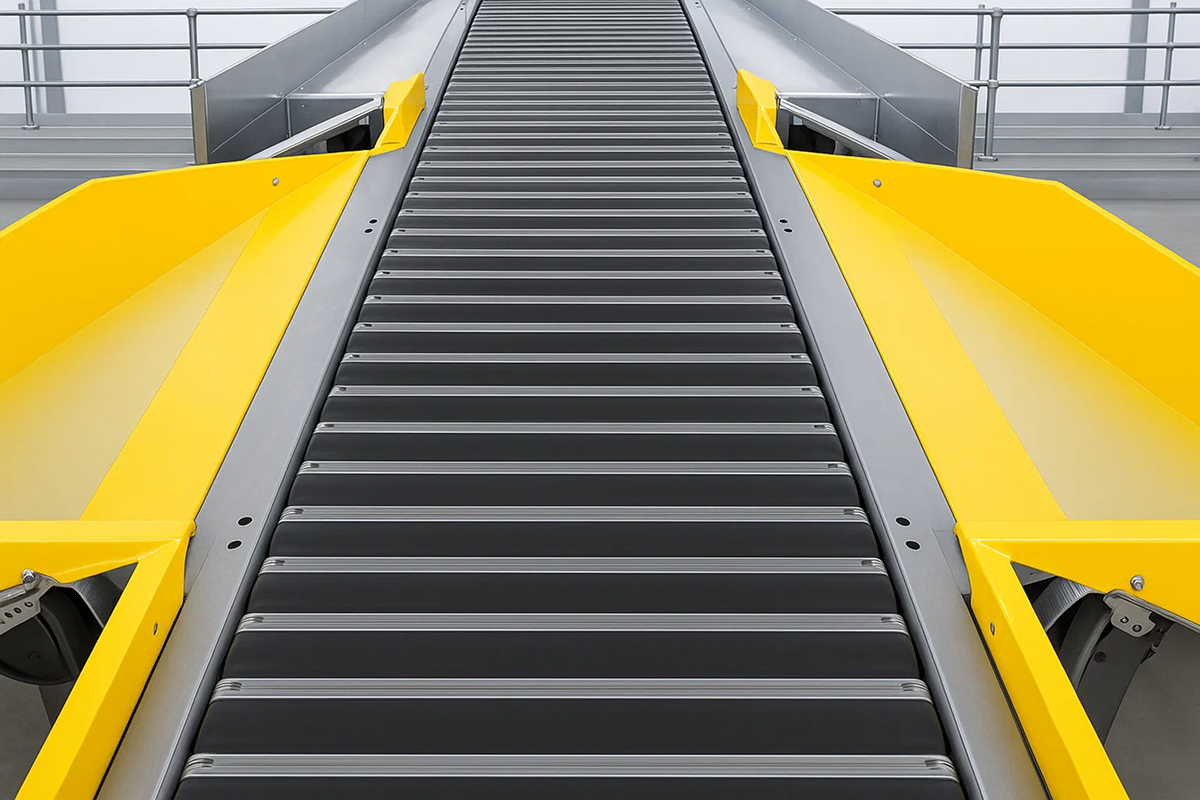
Multi-Belt Sorter